The real costs of poor airflow design
29 July 2025
If you're responsible for a commercial building or industrial space, choosing the right fan isn’t just a technical detail – it can have a major impact on your upfront investment, monthly energy bills, and long-term maintenance costs.
When a fan is oversized or mismatched
Industry‑standard guides (like SaskPower’s for fan systems) warn that oversized fans rarely run at peak efficiency, leading to higher energy use, increased noise, and mechanical stress.
A practical benchmark: moving one tonne of airflow uses about 0.3 kWh, meaning hundreds of thousands of kilowatt‑hours in larger systems – energy you’re paying for, but not using.
Real‑world savings from optimisation
A case study in a cement plant showed that installing an adjustable‑speed (ASD/VFD) drive on a 125 hp fan system delivered:
175,000 kWh of savings per year
Approximately R110,000 in energy savings
R183,000 in reduced maintenance costs
All from better controls and flow matching, with a payback in just 7.5 months.
Ongoing inefficiencies add up
If a large (150 kW) fan system runs at only 95% transmission efficiency due to poor setup or wear, that’s a loss of 7.5 kW – and around R60,000 per year wasted in electricity.
On top of that, badly matched systems cause excess wear, frequent breakdowns, and unscheduled downtime – costs that never show on your utility bill but bite deep.
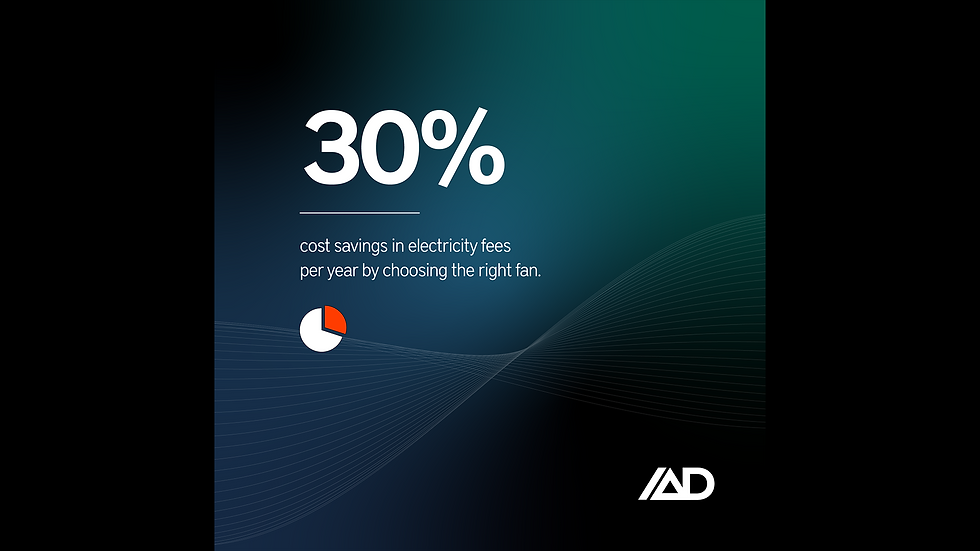
Energy‑efficient fans can cut consumption by up to 30%
Whether it's HVLS fans in warehouses or precision axial units, better airflow design often translates to 20% to 30% lower energy use – in straight watts per moved cubic metre of air.
These savings reduce strain on HVAC systems too: smart fans can reduce cooling loads by circulating air more effectively, making your entire plant or building run more efficiently.
Why this matters for you
Operational costs, fan inefficiencies quietly inflate your electricity bill and increase wear.
Reliability, unnecessary strain leads to repairs and unexpected downtime.
ROI on smart design, payback periods under a year aren’t uncommon when matching fan capacity to load and adding proper controls.
What a trusted fan‑engineering partner does
A trusted partner should help you with:
Site‑based analysis: volume, pressure, load patterns, daily operations
Optimised fan sizing: not over‑specified, not undersized
Speed controls (VFD/ASD): match speed to actual need
Regular commissioning and maintenance: to preserve efficiency over time
This isn’t technical fluff – it’s real operational logic. The right fan system pays its way, and poor choices cost more than just upfronts – they bleed through your energy bills and maintenance logs.
© 2026 Inventive Air Designs (Pty) Ltd. All rights reserved.
© 2026 Inventive Air Designs (Pty) Ltd. All rights reserved.